
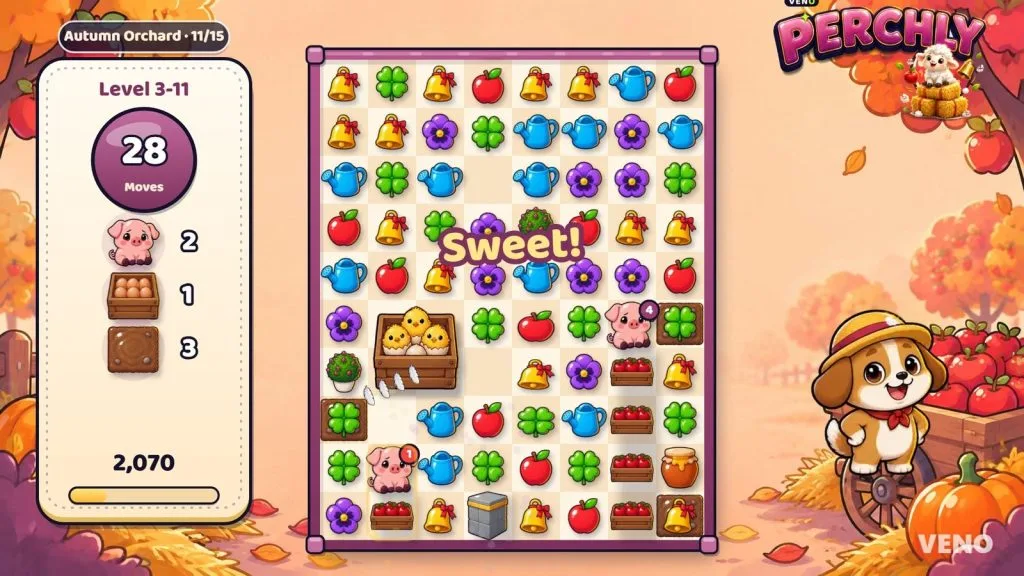
Match-3 combos are what turn a slow level into a fast one. A plain match of three only clears three pieces, but a match of four or five creates a special piece — a rocket, a bomb or a rainbow piece — and swapping two special pieces together sets off an even bigger blast. Learning which shape makes which special, and when to fire it, is the single biggest skill jump in any match-3 game.
| Quick facts | |
|---|---|
| Genre | Match-3 puzzle (swap two neighbours, line up three of a kind) |
| What makes a special | A match of 4, a 2×2 square, an L or T shape, or 5 in a row |
| Strongest move | Swapping two special pieces into each other |
| Where specials came from | Bejeweled-style games of the 2000s, then Candy Crush Saga (2012) |
| Key skill | Making specials near the goal instead of matching anywhere |
| Play free in a browser | VENO Perchly (farm match-3, 60 levels, no install) |
▶️ Watch the gameplay: VENO Perchly on YouTube · Shorts
From plain matches to special pieces
The idea of swapping pieces to make lines of three goes back to Shariki, a 1994 DOS game by Russian programmer Eugene Alemzhin. PopCap made it famous in 2001 with Bejeweled (first released as Diamond Mine), and for a few years most match-3 games were mainly about making plain matches and chaining cascades.
The big change came with Candy Crush Saga from King, launched on Facebook in 2012 and on phones later that year. It gave every bigger match a reward: four in a row made a striped candy that clears a line, an L or T shape made a wrapped candy that explodes, and five in a row made a colour bomb. It also let you swap two special candies together for a combined effect. Since then almost every match-3 game has used the same grammar, just with different art.
Newer hits such as Royal Match (Dream Games, 2021) kept that grammar and added one more shape: a 2×2 square that makes a small flying piece which heads to a goal by itself. Many games also switched from “score points” to goals — collect items, break crates, or bring objects down to the bottom of the board.
The shape tells you the special
Almost every modern match-3 uses the same five shapes. The names change from game to game; the logic doesn’t.
| Match shape | Typical special | What it does | In VENO Perchly |
|---|---|---|---|
| 3 in a row | none | Clears 3 pieces | Clears 3 pieces |
| 4 in a row | Line clearer (rocket, striped candy) | Clears a whole row or column | Firework Rocket |
| 2×2 square | Seeker (propeller, paper plane) | Flies to a goal and hits it | Pinwheel — flies to the lowest tower |
| L or T shape | Bomb (TNT, wrapped candy) | Blasts a square area | Cherry Bomb |
| 5 in a row | Rainbow piece (colour bomb, light ball) | Clears every piece of one colour | Rainbow Egg |
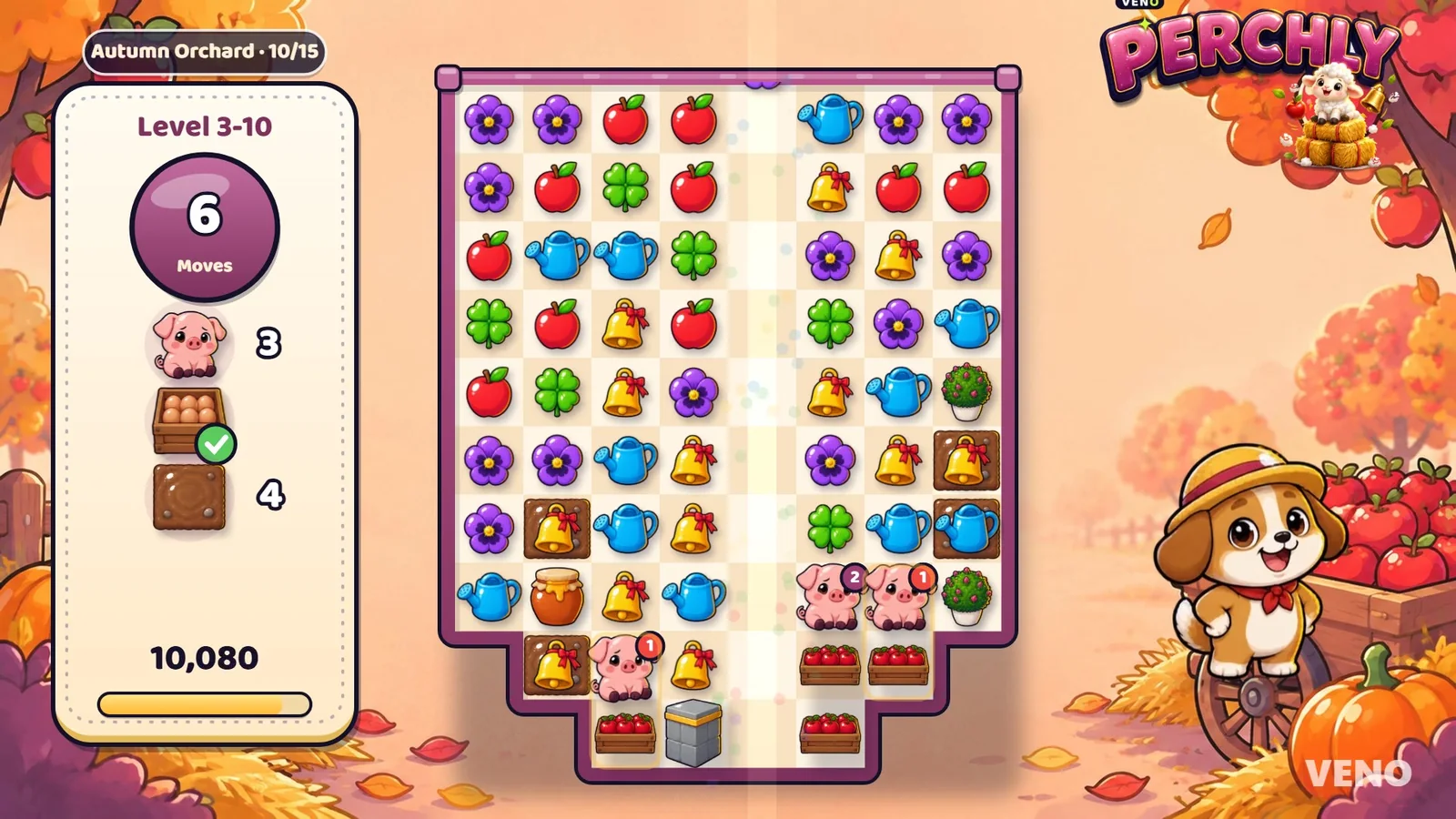
A rocket from a horizontal match usually fires along a column, and one from a vertical match along a row — so the direction you make it in matters. Watch which way the stripe or flame points before you fire it.
Which combos are worth it
Swapping two specials into each other almost always beats firing them one at a time:
- Rocket + rocket fires a cross: one full row and one full column at once. Great for reaching a goal in a far corner.
- Bomb + bomb makes a much bigger blast. In VENO Perchly two Cherry Bombs make a 7×7 double bomb, enough to open a whole side of the board.
- Rocket + bomb (in most games) fires several rows and columns together — a strong choice when goals are spread out.
- Rainbow piece + any special turns many pieces of one colour into that special. It is usually the strongest move in the game, so save it for the turn that wins the level.
- Two rainbow pieces in most games clear the whole board — rare, but worth it on the last move.
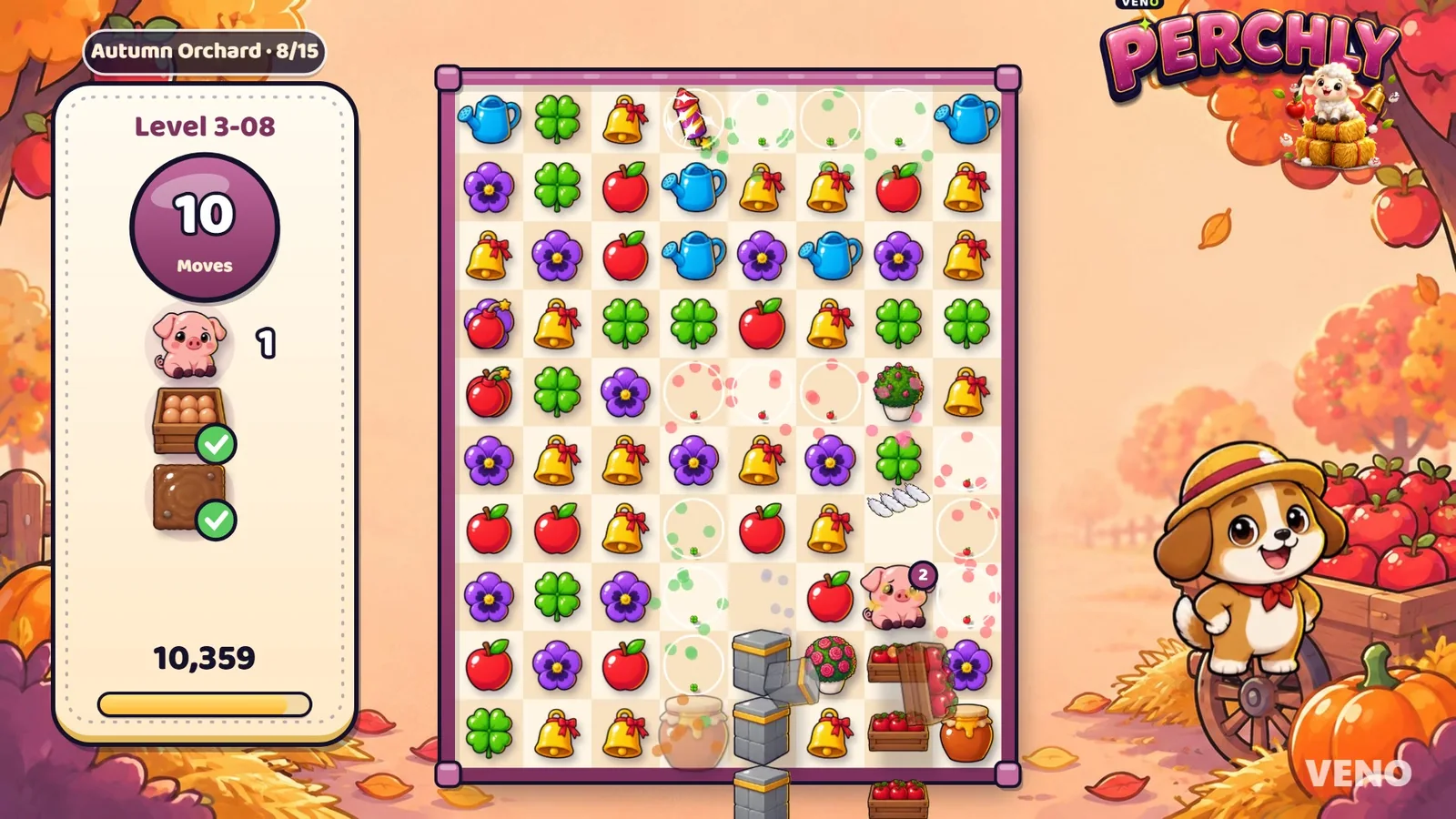
The rule of thumb: a lone special is a tool, a combo is a solution. If two specials sit next to each other, look for the swap that joins them before you do anything else.
Goals change how you use specials
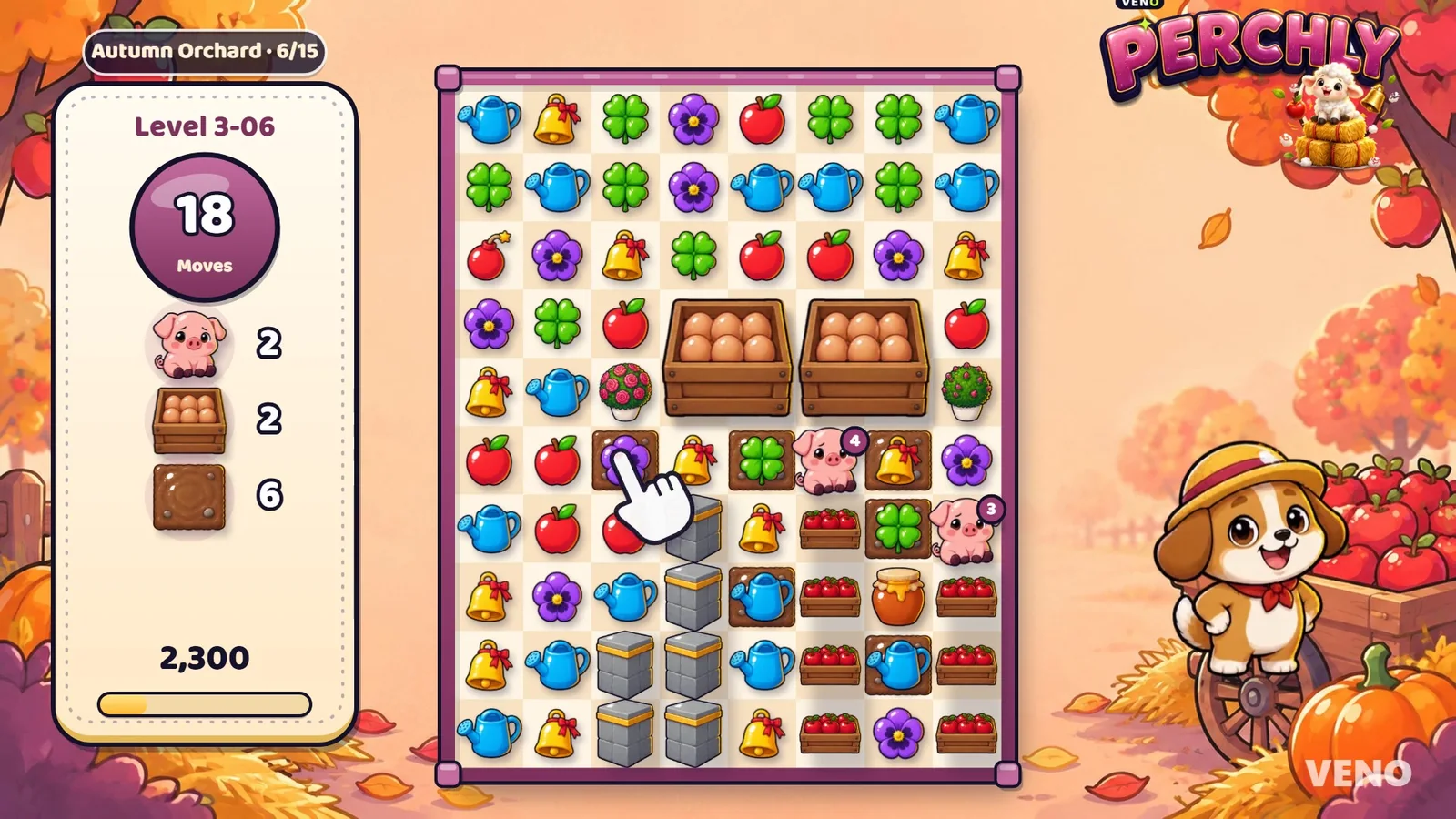
In score-based match-3 you can fire specials anywhere. In goal-based levels, a special fired in the wrong place is simply wasted. VENO Perchly is a good example of a rescue-style match-3: baby animals sit on top of crate towers — hens on corn crates, lambs on hay bales, piglets on apple crates and bunnies on snowy carrot crates — and each match next to the animal knocks one crate off its tower. When the tower is gone, the little friend hops down and runs home.
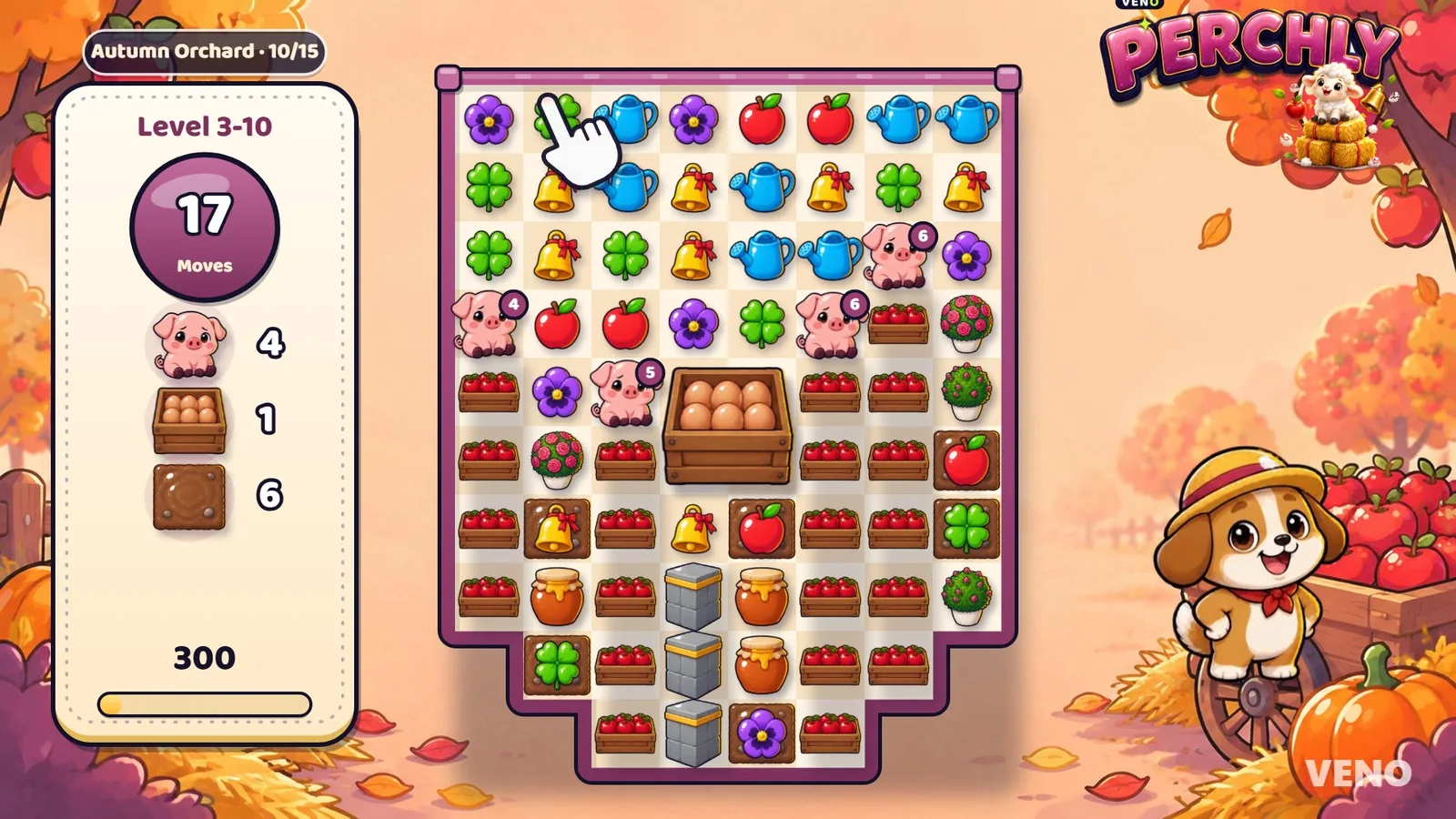
That changes the value of every special:
- The Pinwheel is the star, because it flies to the lowest tower on its own.
- Rockets are best fired along a row or column that passes right beside an animal.
- Bombs are best for side goals such as 2×2 egg crates that hatch into chicks, nests with a baby bird that need three hits, and mud tiles you wash away by matching on top of them.
- Rose bushes, honey jars and stone pillars block the board, so a bomb that clears them can open a path for later matches.
8 tips to beat hard match-3 levels
- Read the goals before your first move. Count what each level wants — animals, egg crates, nests, mud — and plan around the slowest one.
- Work at the bottom when you can. Matches low on the board make pieces fall and create free cascades above them.
- Look for 4s and 5s before 3s. Scan for shapes that make a special; a plain match is the move you take only when nothing better is there.
- Make specials where the goal is. A rocket next to a tower is worth more than a rainbow piece in the wrong corner.
- Save specials, then combine them. Leave a rocket or bomb in place while you build a second one beside it, then swap them together.
- Use the Pinwheel on towers. In VENO Perchly the 2×2 square is the most reliable way to hit the lowest tower without wasting moves.
- Clear blockers early. Rose bushes, honey jars and pillars lock parts of the board; open them up before you run short of moves.
- Keep moves in hand. Finishing with moves to spare earns more stars and coins. If you are stuck, the wooden hammer booster helps in tight spots, and you can take five extra moves when you are just one match short.
Why VENO Perchly is a good place to practise
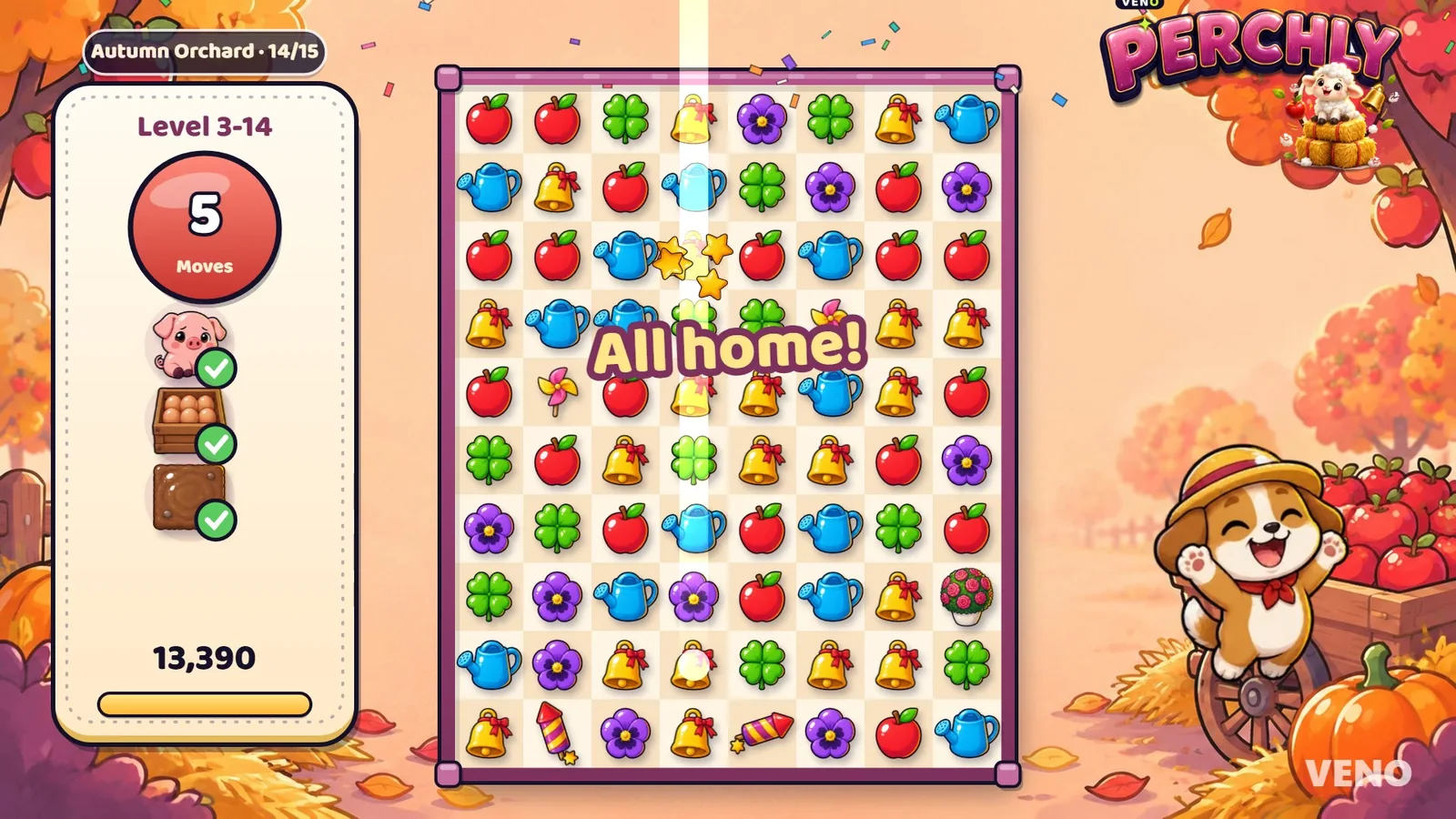
VENO Perchly uses the full modern set of specials — Firework Rocket, Pinwheel, Cherry Bomb and Rainbow Egg — with clear goals that reward thinking about where you make them. Its 60 levels are split into four seasons of 15 (Spring Meadow, Summer Hayfield, Autumn Orchard and Winter Farm), with a new idea in almost every level and a tougher finale at the end of each season. A swap that makes no match slides back and costs nothing, so you can test ideas freely.
It runs free in your browser on phone, tablet or computer, in portrait or landscape, with nothing to install and ten languages. There is no betting or real-money play.
FAQ
What is the best combo in match-3 games?
In most games it is a rainbow piece (colour bomb) swapped with another special, because it turns many pieces of one colour into that special at once. Two rainbow pieces together usually clear the whole board.
How do you make a bomb in match-3?
Match five pieces in an L or T shape. In VENO Perchly this makes a Cherry Bomb; in other games it may be called TNT or a wrapped candy.
What does a 2×2 square match do?
In many newer match-3 games a 2×2 square makes a small seeker that flies to a goal. In VENO Perchly it makes a Pinwheel that flies straight to the lowest tower.
What was the first match-3 game?
Shariki, a 1994 DOS game by Eugene Alemzhin, is usually named as the first. Bejeweled (2001) made the genre popular, and Candy Crush Saga (2012) made special pieces and combos standard.
Do bad swaps cost a move in VENO Perchly?
No. A swap that makes no match slides back and costs nothing.
Can I play VENO Perchly for free on my phone?
Yes. VENO Perchly runs free in mobile and desktop browsers with nothing to install.