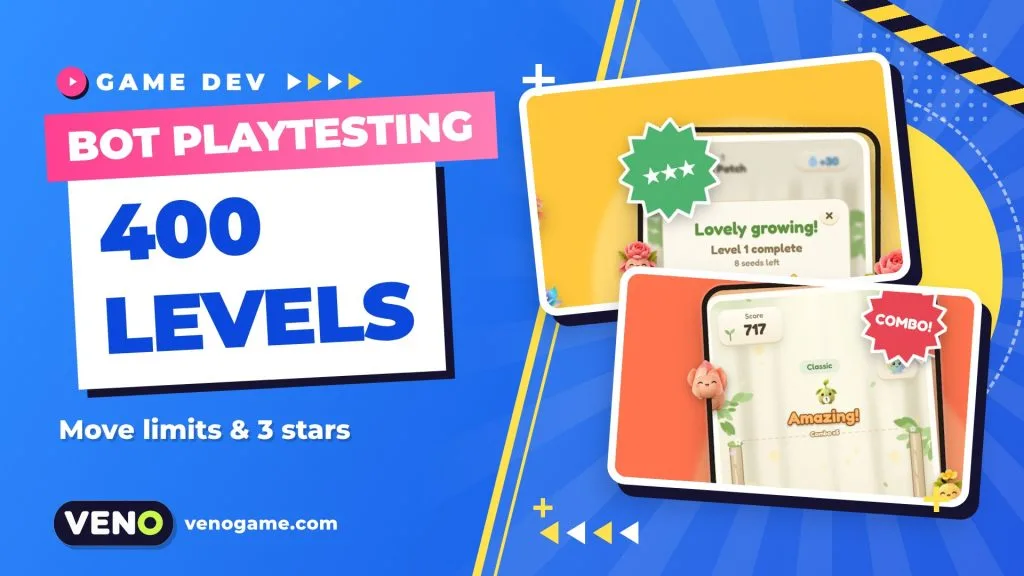
Bot playtesting means letting small computer players run your levels hundreds of times, then reading the results to set the move limit and the star scores. Instead of guessing how hard level 312 is, you measure it. One solo developer used this to balance all 400 levels of a cozy merge puzzle, and Candy Crush maker King has published research showing bots can estimate a new level’s difficulty in under a minute.
This guide explains how the method works, what numbers to collect, where it fails, and how to build a small version for a browser game.
Quick facts
| The game | Moss & Glow, a cozy drop-and-merge puzzle |
| Size | 400 levels across 20 seasons, 21 creatures to collect |
| Platform | Android, on Google Play (ads and in-app purchases) |
| Built with | Phaser 4, TypeScript, Matter.js physics, Vite, wrapped as an app with Capacitor 8 |
| What the bots decide | The drop budget for each level and the 2-star and 3-star thresholds |
| Bigger example | King, “Human-Like Playtesting with Deep Learning” (IEEE CIG 2018) |
Why hand-tuning hundreds of levels breaks down
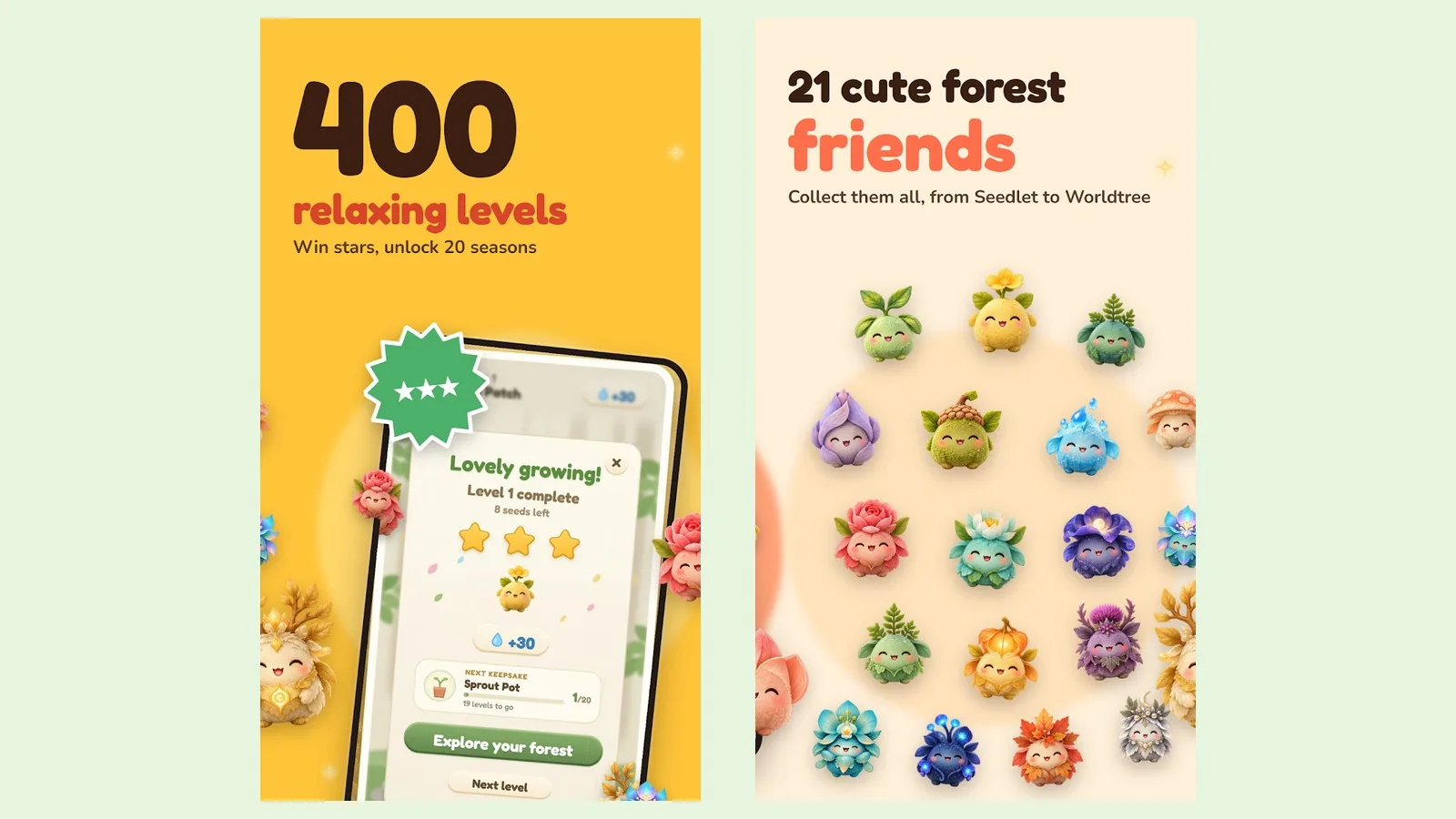
In Moss & Glow you drop plush forest creatures into a planter. Two of the same kind merge into the next, bigger one, from a tiny Seedlet up to the golden Worldtree. The merges use real, bouncy physics, so the same drop never lands exactly the same way twice. Every level shows a goal and how many seeds (drops) you get, and you can earn up to three stars. There are no timers and no lives.
Here is the problem: with physics, one playthrough tells you almost nothing. A level can feel easy on your third try and impossible on your fourth. The developer says balancing level 1 by hand took an afternoon. At that pace, 400 levels would never have shipped. Level 400, balanced by bots, took zero minutes of their time.
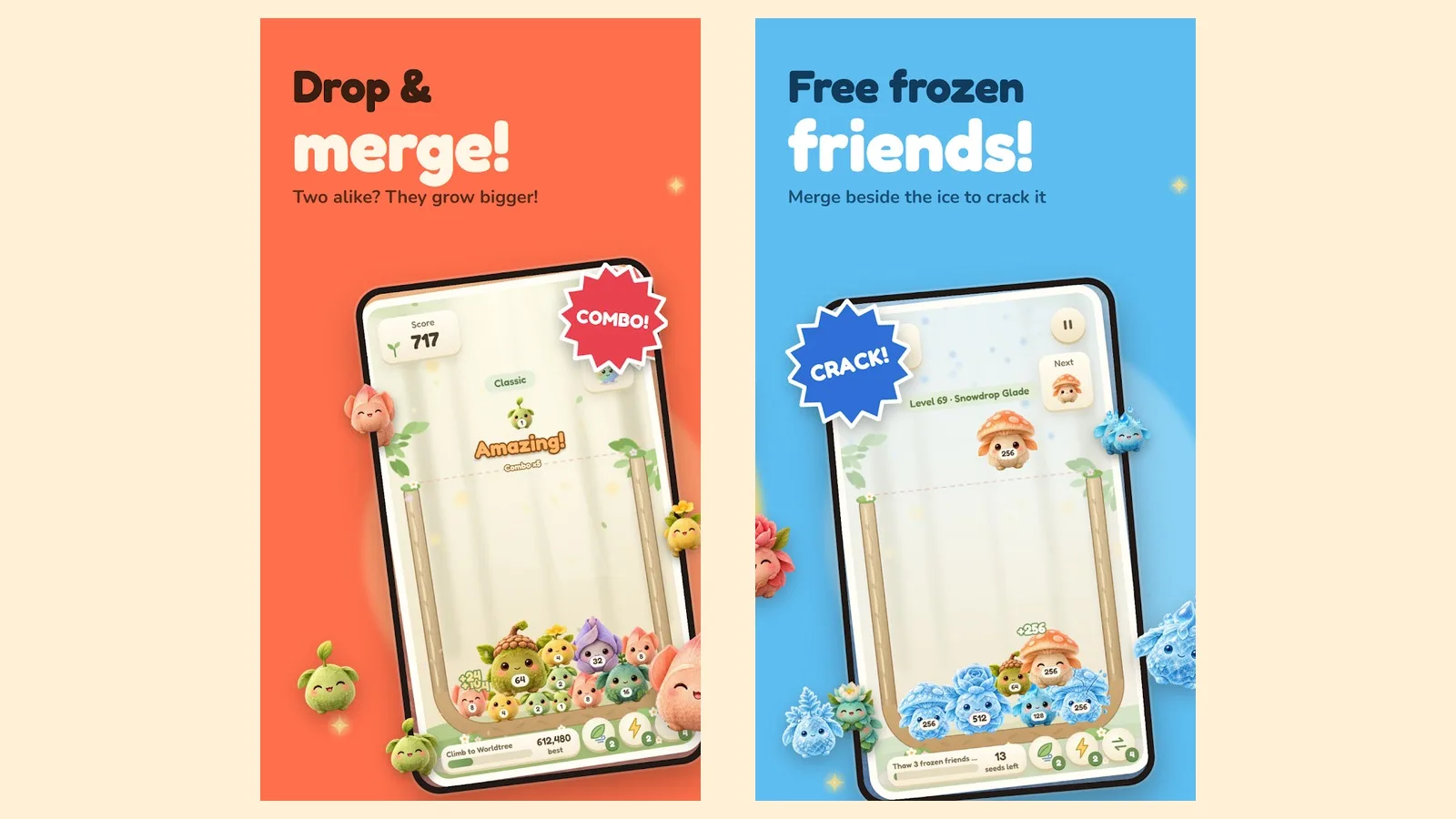
Later seasons add new rules, such as frozen friends you thaw by merging beside them, fireflies, pebbles, acorns, wind, thorns and cocoons. Each new rule changes how many drops a level needs, which is exactly the kind of number a person guesses badly and a bot measures well.
How a bot playtesting pipeline works
The setup described by the developer has five parts. You can rebuild the same shape in almost any engine.
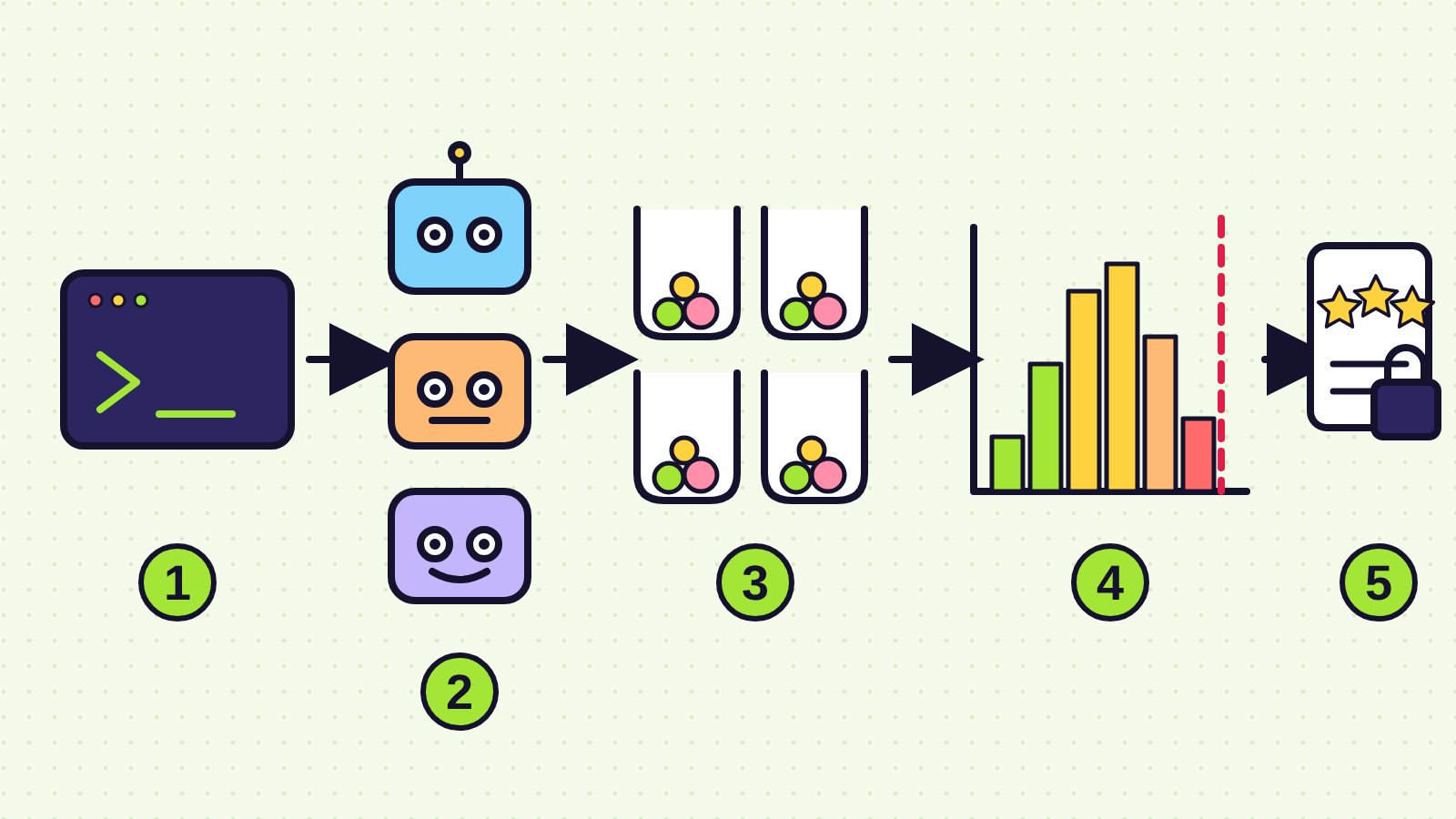
- Run the game without graphics. The game logic runs headless in Node, so a level plays in a fraction of a second with no rendering.
- Write bots with different skill levels. The developer uses more than one bot, for example a “decent” player and a “careful” player, so the numbers reflect more than one style of play.
- Play every level many times. Each bot replays each level again and again. For every run, the tool records one number: the drop on which the goal was met.
- Turn the results into rules. The drop budget is the smallest number of drops at which a normal player nearly always wins. The 2-star and 3-star lines come from how many drops a good player usually has left over.
- Write it back and lock live levels. One command,
npm run calibrate -- --from 201 --to 220 --write, plays levels 201 to 220, picks the numbers and saves them into the level file. Levels that are already live are locked, so a later re-tune can never take stars away from real players.
The developer calls this tool probably the best investment they made in the whole project.
Reading the numbers: from drop counts to stars
The heart of the method is a simple chart: how many runs finished in 18 drops, 19 drops, 20 drops and so on. Most runs pile up in the middle, a few lucky ones finish early, and a few slow ones drag on.
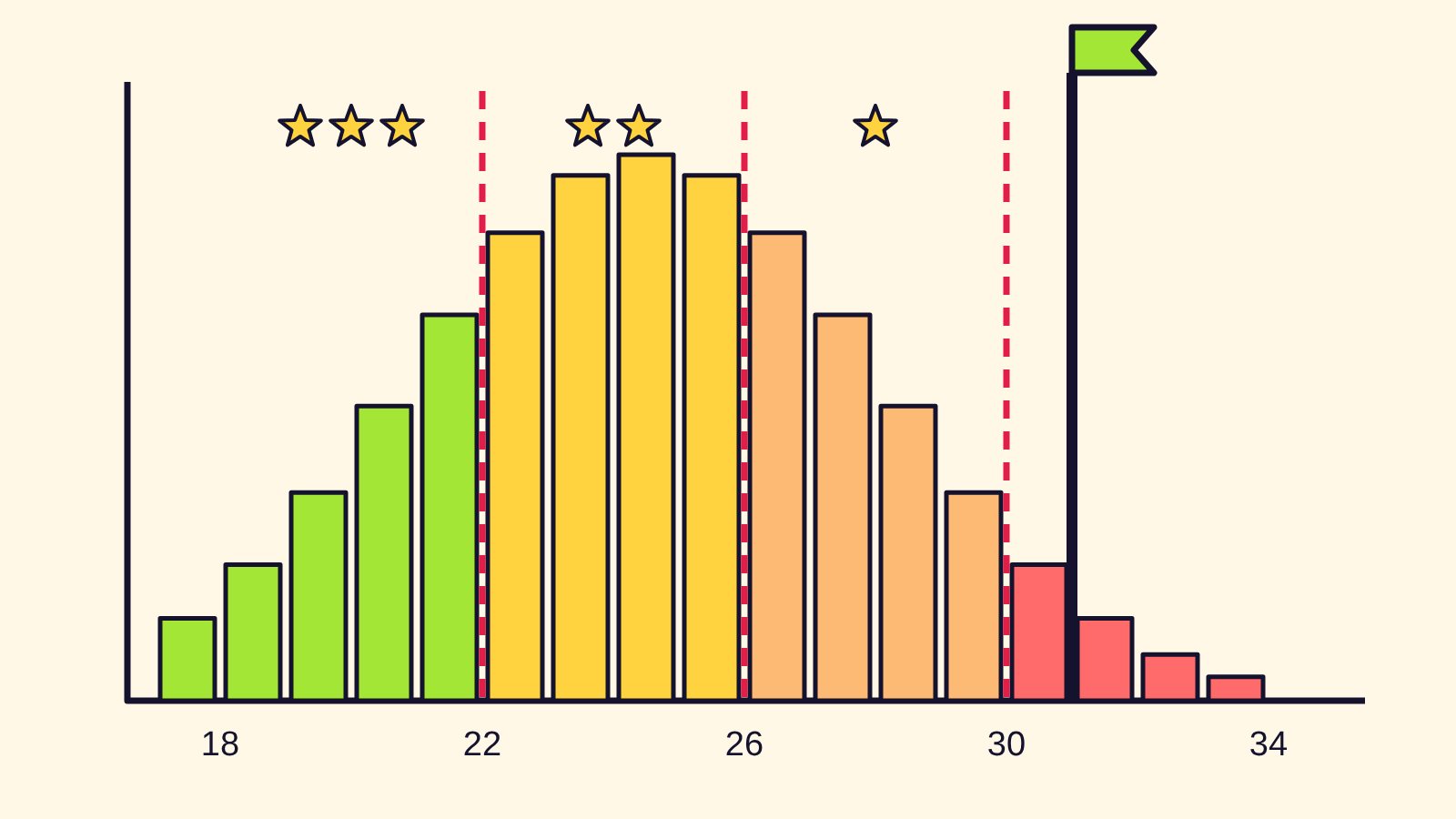
The chart above is an example, not real game data. It shows one common way to place the lines:
| Line on the chart | What it means | A typical rule of thumb |
|---|---|---|
| Drop budget (flag) | Almost every “normal” bot run finishes before it | Put it just past the slow tail of the normal bot |
| 1 star | You cleared the level | Any finish inside the budget |
| 2 stars | A solid, careful run | Around the middle of the good bot’s results |
| 3 stars | A great run with drops to spare | Only the better runs reach it, so it feels “a little hard but fair”, as the developer puts it |
Two practical notes. First, use the same random seed for a bot and for a test run when you compare them, otherwise you are comparing luck. Second, keep the raw counts. If players later say a level feels unfair, you can look at the chart again instead of guessing.
What King learned doing this for Candy Crush
Big studios have done bot playtesting for years. In a 2018 paper, King’s AI team in Stockholm trained a neural network on the moves of about 1% of players, picked at random over about two weeks, in Candy Crush Saga and Candy Crush Soda Saga. The bot simply plays the move most humans would make in that position. It predicted the human move about 47% to 48% of the time.
That was enough to be useful. With 1,000 bot attempts per level, its predicted success rate was off by 4.0 percentage points on average in Candy Crush Saga, better than an older tree-search bot at 5.4. The real win was speed: the team could estimate the difficulty of a new level in under a minute, compared with seven days of human playtesting for each new episode of 15 levels.
A 2020 study by Aalto University and Rovio went further. Using Angry Birds Dream Blast, it combined reinforcement-learning bots with a simulated population of players who differ in skill, persistence and boredom, to predict both pass rate and churn, meaning the levels where people quit. You can read it on arXiv.
| Solo dev (Moss & Glow) | King (Candy Crush) | Aalto + Rovio | |
|---|---|---|---|
| Bot type | Hand-written bots, several skill levels | Network trained on real player moves | Reinforcement learning plus simulated players |
| Main output | Drop budget and star lines | Success rate per level | Pass rate and churn per level |
| Needs player data first? | No | Yes | Yes, to check the model |
Where bots get it wrong
Bots measure difficulty, not fun. Two weeks after launch, Moss & Glow reported a day-one retention of about 8%: players who stay play around 18 minutes a day, but most never come back after the first day. Perfect star lines cannot fix a first session that does not hook people.
Some honest limits to keep in mind:
- Bots do not get bored, confused or annoyed. The developer found that every extra pressure, like timers, harsh fail screens and pushy popups, made the game worse, and removing them made it better. No bot would have reported that.
- Bots can play differently from people. A good check is to compare bot drop counts with real players’ drop counts on the first few levels, using the same seed.
- Early levels need human eyes. If players leave on level 1 or 2, the problem is usually the first minutes of feel and teaching, not the numbers.
How to build a small version for a browser game
You do not need machine learning to start. If your game is a web game, these habits make bot playtesting cheap:
- Keep rules apart from drawing. Put the board, the moves and the win check in plain modules that run in Node without the canvas. Moss & Glow’s developer says about 95% of the work happens in browser hot reload, with the logic shared.
- Seed every random number. A seeded generator makes each run repeatable, so a strange result can be replayed and inspected.
- Start with two bots. A greedy bot that takes the best-looking move and a careful one that looks one step ahead already give you a spread.
- Run hundreds of games per level, not ten. Ten runs show luck; hundreds show the shape of the chart.
- Write the numbers into your level files automatically and lock any level that players already have.
- Still test on a real phone. Touch feel, safe areas, the back button, audio and ads only show up on the device.
Play a similar game on VENO
If you like level-based puzzles where every stage gives you up to three stars, try VENO Pairly, a free pair-matching puzzle that runs right in your browser.
FAQ
What is bot playtesting?
It is testing a game by letting automated players run each level many times and collecting numbers such as how many moves or drops a win takes. Designers use those numbers to set limits and star scores.
Can bots replace human playtesters?
No. Bots are great at measuring difficulty at scale, but they cannot tell you whether a level is fun, confusing or annoying. Use bots for numbers and people for feel.
How does a game decide how many moves you get?
In games tuned with bots, the move or drop limit is usually set so that a typical player nearly always wins within it, based on many simulated runs of that level.
Why is 3 stars so hard to get on some levels?
The 3-star line is usually set where only the better runs finish, so most players clear the level easily but need a good plan to earn the top score.
Do I need machine learning for bot playtesting?
No. Simple hand-written bots of different skill levels are enough for many puzzle games. Learning from player data, like King did, helps when you want bots that copy human habits.