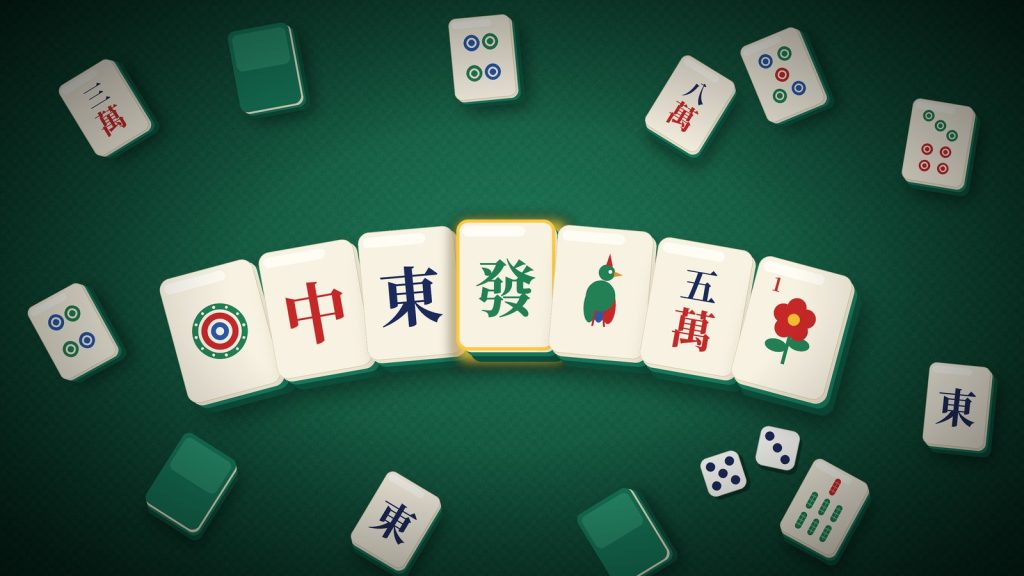
Mahjong is a tile game that originated in China and is usually played by four people. Each player draws and discards tiles, trying to be the first to build a complete hand of sets. If you know rummy, you already understand the basic idea — Mahjong simply swaps cards for beautifully engraved tiles and adds far more strategy.
The word “Mahjong” is also used for a completely different single-player game: Mahjong solitaire, where you clear a stacked layout by matching pairs. This guide covers both, so you will know exactly which one you are looking at.
Mahjong at a glance
| Classic Mahjong | Mahjong solitaire | |
|---|---|---|
| Origin | China, 19th century | Computer game, 1981 |
| Players | 4 (variants for 3) | 1 |
| Tiles | 144 in most Chinese sets | Usually 144 |
| Goal | Complete a hand of four sets and a pair | Remove every tile from the board |
| Core skills | Planning, probability, reading opponents | Pattern recognition, planning ahead |
Where did Mahjong come from?
Mahjong took shape in eastern China during the Qing dynasty, most likely in the second half of the 19th century. Historians connect it to earlier Chinese card games whose suits represented money: coins, strings of coins and tens of thousands of coins. Those three suits survive in Mahjong tiles today. Popular stories that credit Confucius with inventing the game are legends with no historical evidence.
The name is usually linked to the Chinese word for sparrow (麻雀), which is also why the “1 of Bamboo” tile is often drawn as a bird. In the 1920s Mahjong spread to the United States and Japan, where it became a national craze. American players later formed the National Mah Jongg League in 1937, and Japan developed its own popular style, Riichi Mahjong.
The 144 tiles explained
A standard Chinese set has 144 tiles in three groups.
Suited tiles (108). Three suits — Dots (also called Circles), Bamboo and Characters — each numbered 1 to 9, with four copies of every tile.
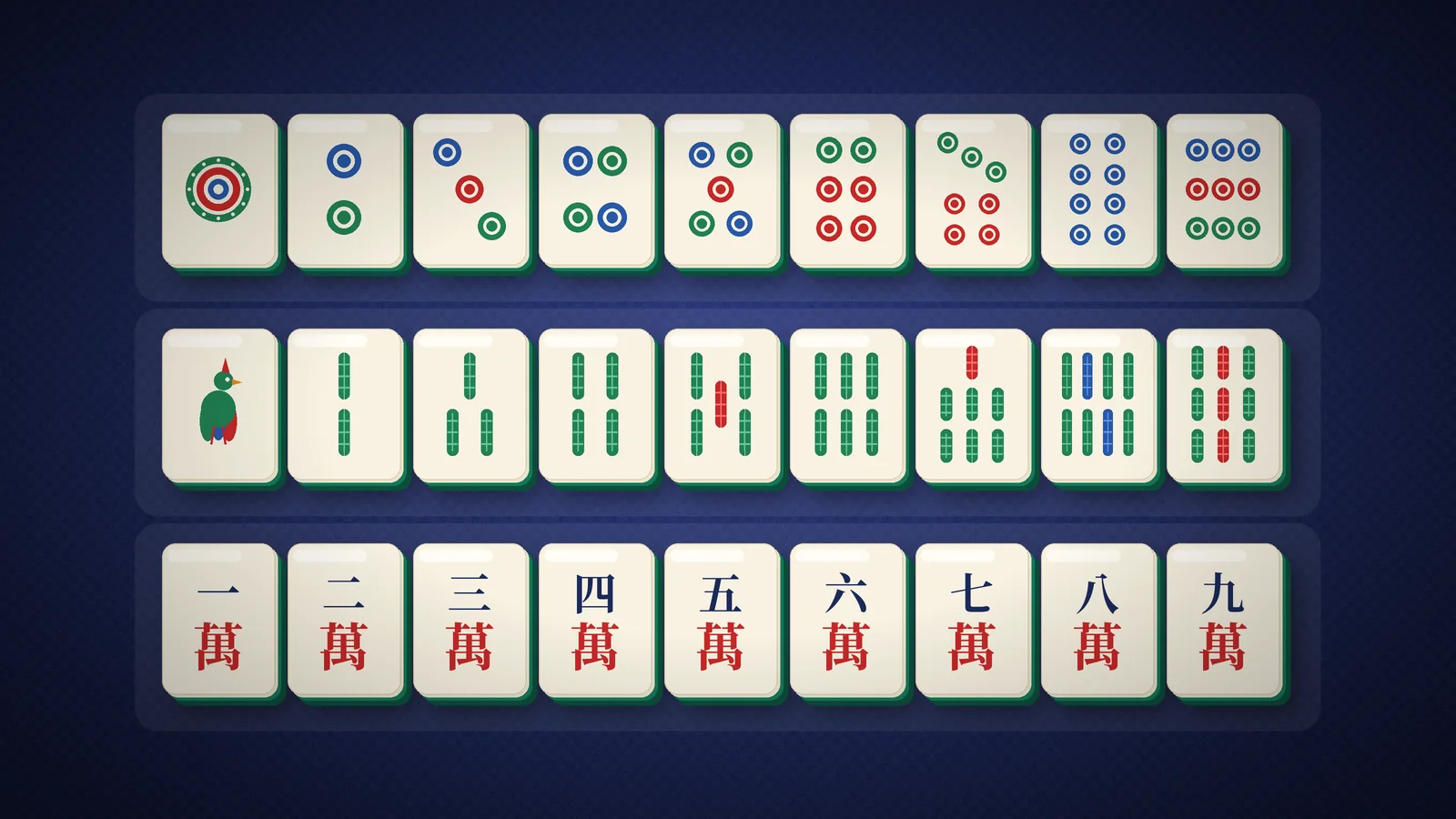
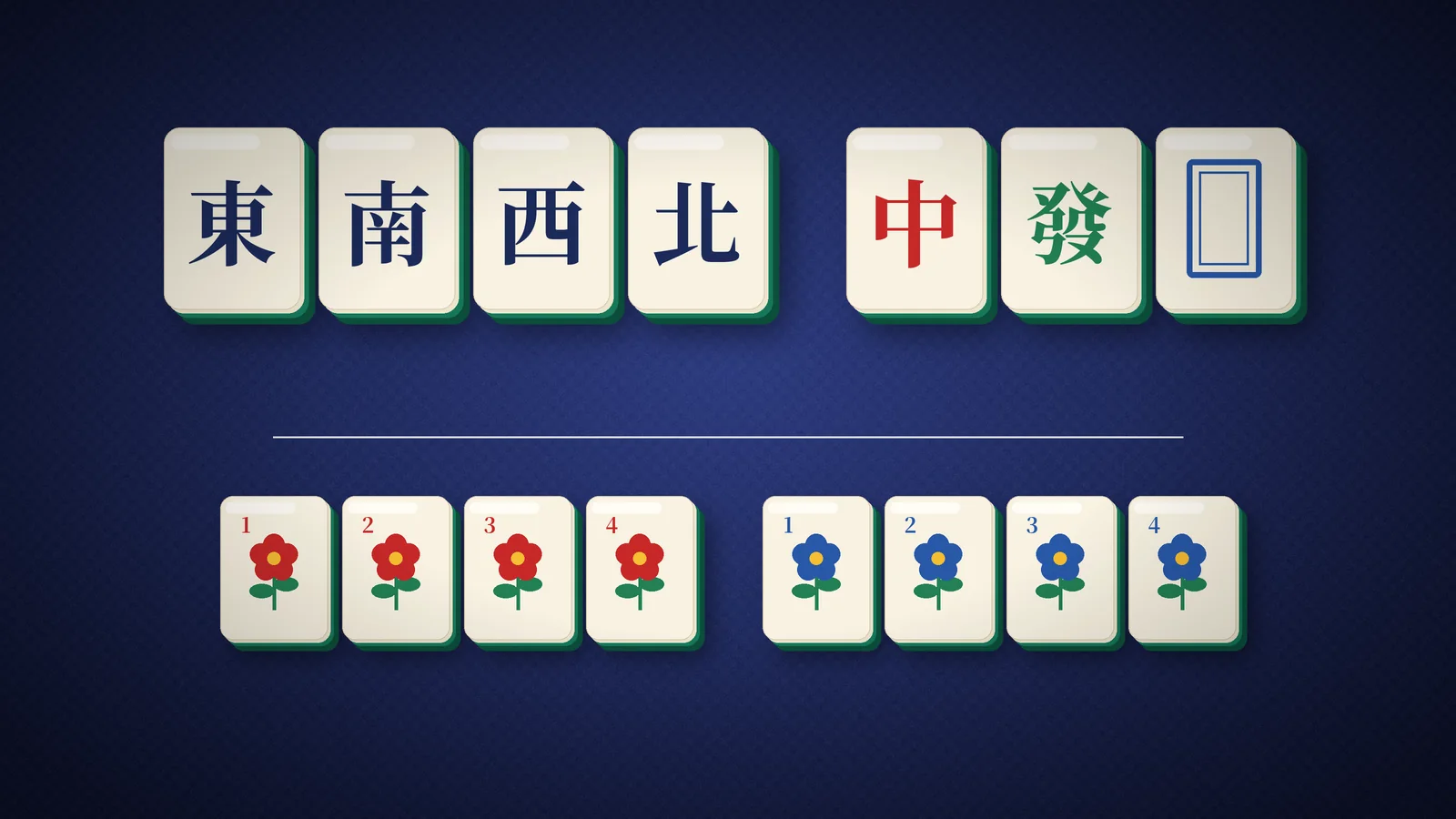
Honor tiles (28). Four Winds (East, South, West and North) and three Dragons (Red, Green and White), again four copies of each. The White Dragon is often shown as a blank tile or a blue frame.
Bonus tiles (8). Four Flowers and four Seasons, one copy each. They add points in some rule sets and are left out entirely in others.
How a game of Mahjong works
Rules differ between regions, but the core loop is the same almost everywhere.
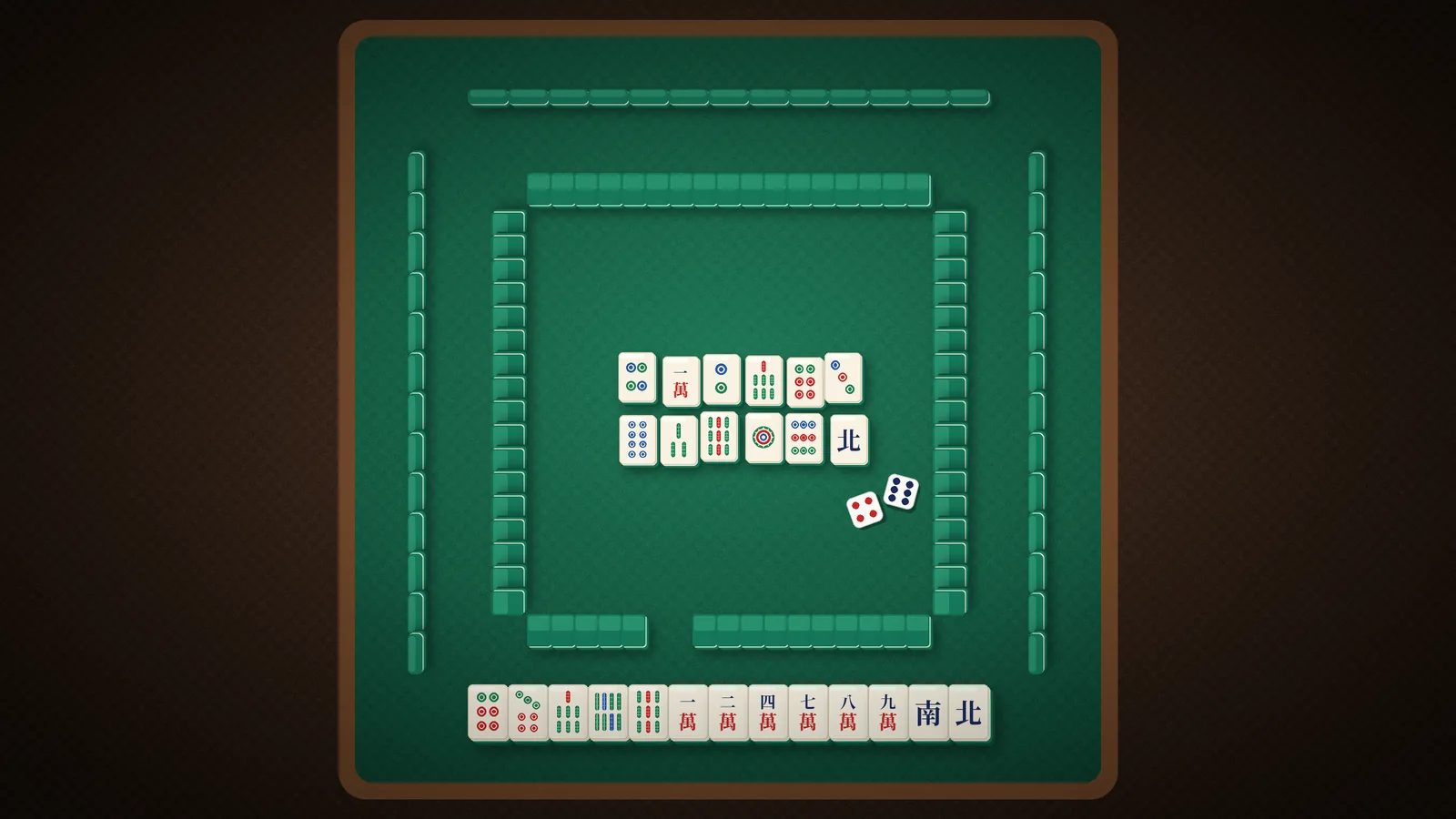
- Build the wall. Tiles are shuffled face down and stacked into four walls that form a square. Each player takes 13 tiles; the dealer takes 14.
- Draw and discard. On your turn you draw one tile and discard one, always keeping 13 in hand. Play usually moves counter-clockwise.
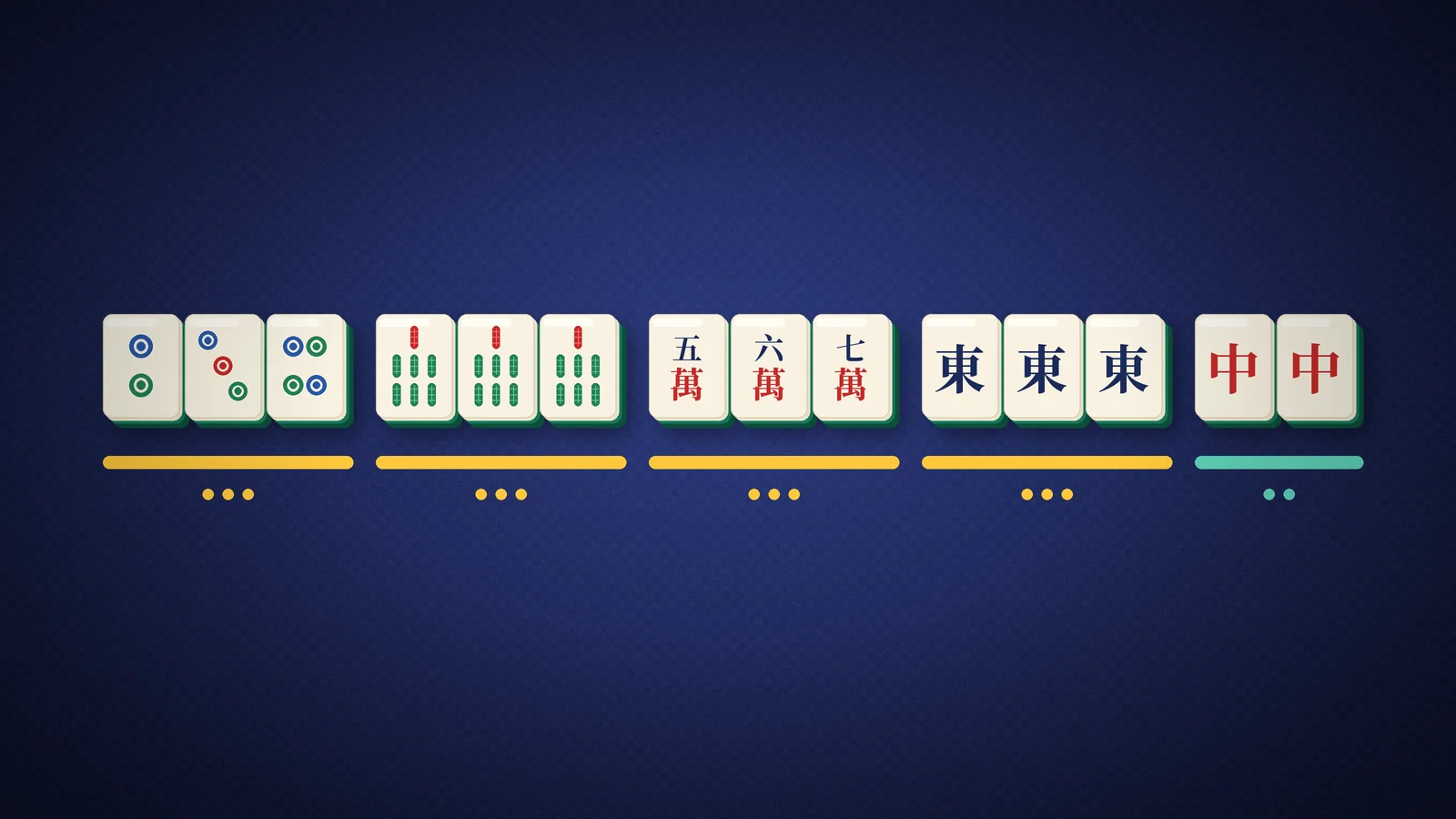
- Claim discards. You can take another player’s discard to complete a set: a Pung (three identical tiles), a Kong (four identical tiles) or a Chow (three consecutive tiles of one suit, which you can only claim from the player just before you).
- Win the hand. A standard winning hand has 14 tiles: four sets plus one pair. The first player to complete it declares “Mahjong” and scores the hand.
Scoring is where variants differ most. Some count only a few basic patterns, while competition rules recognise dozens of scoring combinations.
Popular Mahjong variants
| Variant | What makes it distinctive |
|---|---|
| Chinese Official (Guobiao) | Competition rules with 81 scoring patterns and a minimum score to win |
| Hong Kong / Cantonese | Fast pace and relatively simple scoring — a common starting point |
| Japanese Riichi | 136 tiles without Flowers, a “riichi” declaration and bonus dora tiles |
| Taiwanese | Hands of 16 tiles, so a winning hand needs five sets and a pair |
| American | Jokers, a pre-game tile exchange called the Charleston, and a card of winning hands updated every year |
Mahjong vs. Mahjong solitaire
Mahjong solitaire uses the same tiles but is a different game. Tiles are stacked in a layered layout, and you remove them two at a time by matching identical tiles that are free — nothing on top, and at least one side (left or right) open. You win by clearing the whole board.
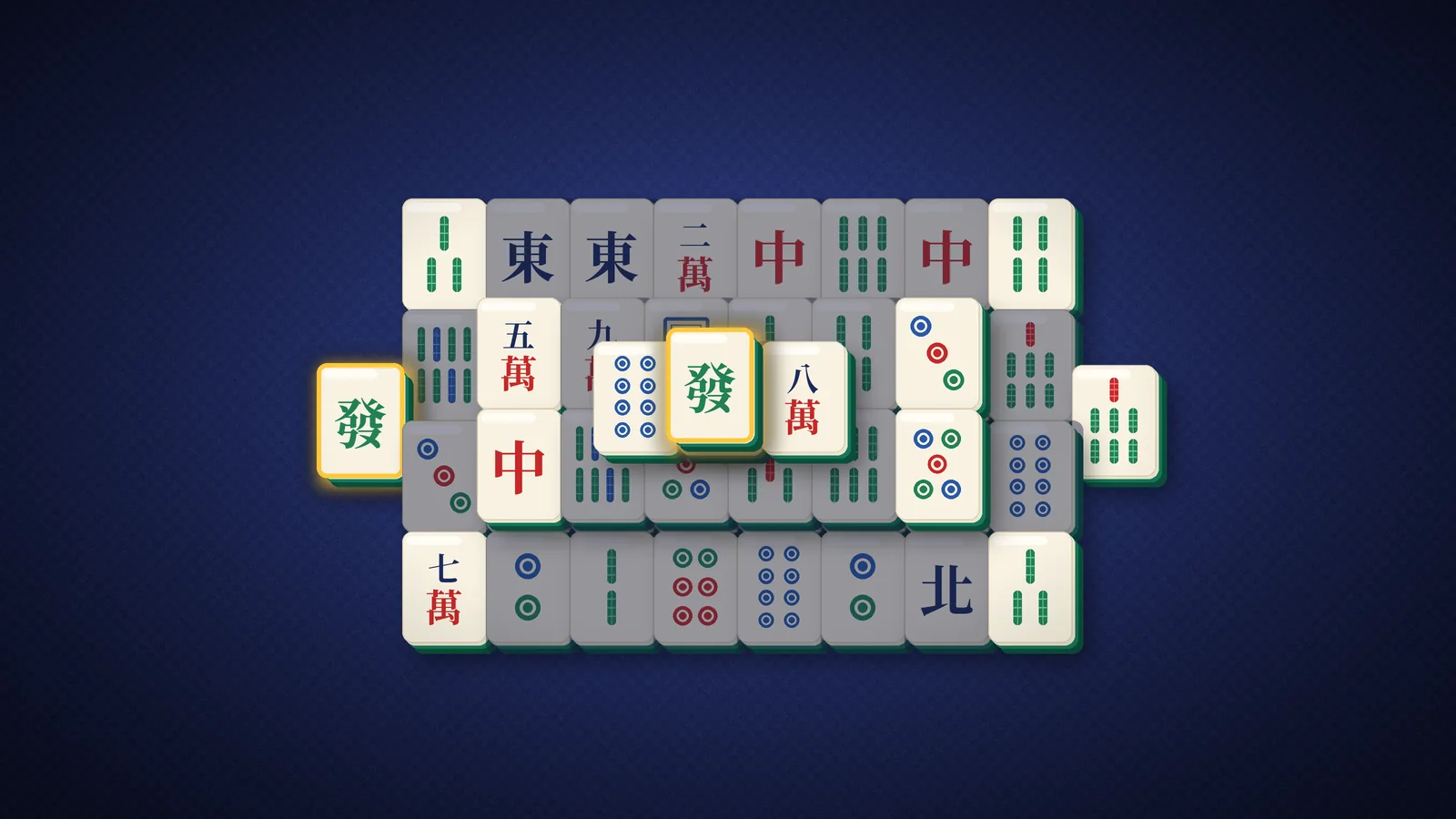
The format was created as a computer game by Brodie Lockard in 1981 and became widely known through Activision’s Shanghai in 1986. Today it is one of the most-played puzzle games on computers and phones, and a great way to learn the tiles before sitting down at a four-player table.
Why people love Mahjong
Classic Mahjong mixes luck with real decision-making: which tiles to keep, which to give away, and what your opponents are collecting. It is also deeply social, played at family gatherings and in clubs around the world. The solitaire version offers a calmer challenge that rewards focus and pattern recognition in just a few minutes.
How to start playing
- Learn the tiles first. Being able to read suits and honors quickly makes every other rule easier.
- Pick one rule set. Ask the group you play with which variant they use, and learn only that one at the beginning.
- Play with open hands. For your first games, lay your tiles face up so more experienced players can explain decisions.
- Warm up with solitaire. Matching tiles against the clock builds recognition speed with no pressure.
If you want to start right away, try VENO Tiles, a free Mahjong solitaire game that runs in your browser on both phone and computer — no download and no account needed.
Frequently asked questions
Is Mahjong hard to learn?
The basics take about an hour to understand. Scoring and strategy take longer, which is a big part of the game’s lasting appeal.
How many tiles are in a Mahjong set?
Most Chinese sets have 144 tiles. Japanese Riichi uses 136, and American sets add jokers for a total of 152.
Is Mahjong solitaire the same as Mahjong?
No. They share the tiles, but solitaire is a single-player matching puzzle, while classic Mahjong is a four-player game of building hands.
Do you have to play Mahjong for money?
No. Mahjong is a game of skill and strategy that millions of people play purely for fun, and online solitaire versions like VENO Tiles involve no stakes at all.